Why Group Work Can Be So Hard for ADHD Students
“Okay everyone, get into groups of four…”
For some students, those words mean:
Great! We get to work with our friends.
For a student with ADHD, they can sometimes mean:
Who am I working with? Where do I sit? What are we doing? Who's talking? When is it my turn? Wait… what was the task again?
Group work can look like one activity.
But underneath it are a LOT of smaller demands happening at the same time.
And sometimes, the hardest part of group work isn't actually the work.
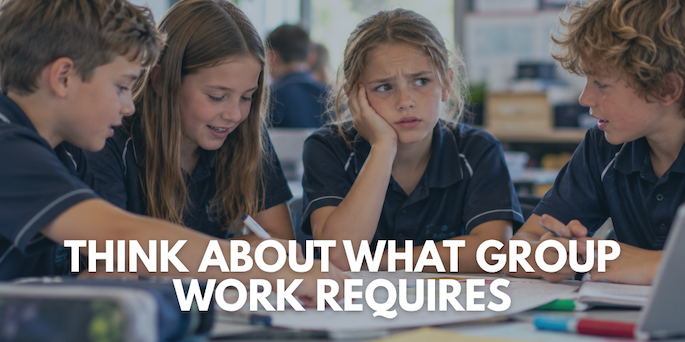
To successfully participate in a group, a student may need to:
Listen while other people are talking
Remember what they wanted to say while waiting their turn
Resist interrupting
Follow several different conversations
Ignore what's happening in nearby groups
Understand social cues
Share control of the task
Organise ideas
Remember the instructions
Manage frustration when others disagree
Work at someone else's pace
Stay focused when the environment becomes noisy
That's a significant amount of executive functioning packed into one classroom activity.
So when a student begins interrupting, wandering away, taking over, becoming frustrated or doing very little…
It's worth looking beyond:
“They don't work well in groups.”
The Student Who Takes Over
Sometimes you'll have a student who wants to control everything.
They choose the roles.
They decide how the poster should look.
They correct everyone else's ideas.
They struggle when the group changes direction.
It can look bossy.
But sometimes controlling the task is a way of making an unpredictable situation feel more manageable.
Knowing exactly what's happening can reduce the mental load of having to constantly adjust to everyone else.
The Student Who Does Nothing
Then there's the student who seems to disappear into the group.
Everyone else starts working while they sit back, fiddle with something or wait.
This isn't necessarily a lack of interest.
They may simply not know:
Where do I start?
What am I responsible for?
What is everyone else doing?
When responsibility belongs to everyone, it can sometimes feel like it belongs to no one in particular.
Clear individual roles can make a huge difference.
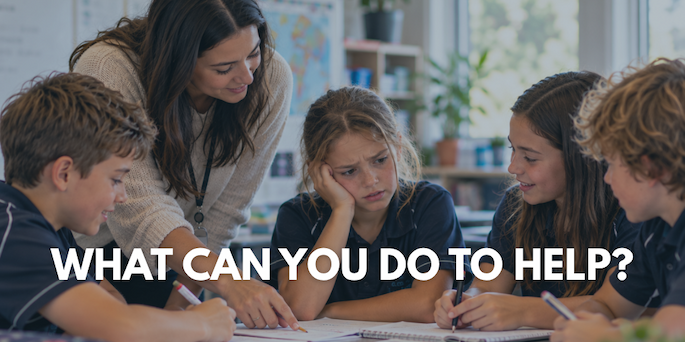
1. Give Everyone a Clear Role
Instead of:
“Work together to complete this.”
Try assigning roles such as:
Writer | Researcher | Timekeeper | Presenter
Now each student knows exactly where they fit.
2. Keep the Instructions Visible
Don't rely on students remembering verbal instructions while also managing everything happening within the group.
Put the steps on the board, worksheet or table.
Something as simple as:
Choose roles
Discuss ideas
Complete the task
Check your work
Choose who will present
can remove a surprising amount of mental load.
3. Make the First Step Obvious
Starting can be one of the hardest parts.
Instead of:
“Off you go!”
try:
“Your first job is to decide who is doing each role.”
One clear starting point creates momentum.
4. Consider the Environment
Six groups talking at once can become a lot to filter.
Where possible, consider:
Smaller groups
Strategic seating
A quieter workspace for groups who need it
Allowing appropriate movement
Reducing unnecessary background noise
Sometimes changing the environment works better than repeatedly asking a student to focus.
5. Check In Before Things Fall Apart
Don't wait until the student is completely disengaged or frustrated.
A quick:
“What's your job in the group?”
or
“Show me what you're working on right now.”
can help bring their attention back to the task without turning it into a correction.

The next time you plan group work, identify the things you're expecting students to figure out for themselves.
Where will they sit?
Who will do what?
What's the first step?
How long do they have?
What does finished look like?
Then make just one of those things more visible or predictable.
Because sometimes a student doesn't need to get better at group work.
They need group work to require a little less guesswork.
Until next time,