When Fun Is Exhausting: The ADHD Social Hangover
You had a great time.
You laughed.
You talked.
You stayed longer than expected.
You genuinely enjoyed yourself.
Then the next day?
You want absolutely nobody to speak to you.
Welcome to what many adults describe as the ADHD social hangover.
And as we head towards one of the busiest social times of the year — Halloween celebrations, end-of-year events, work functions, Christmas parties, school events, family gatherings and catch-ups with everyone you promised “we definitely need to see before Christmas” — it’s worth talking about.
Because enjoying yourself and feeling completely exhausted afterwards can both be true.
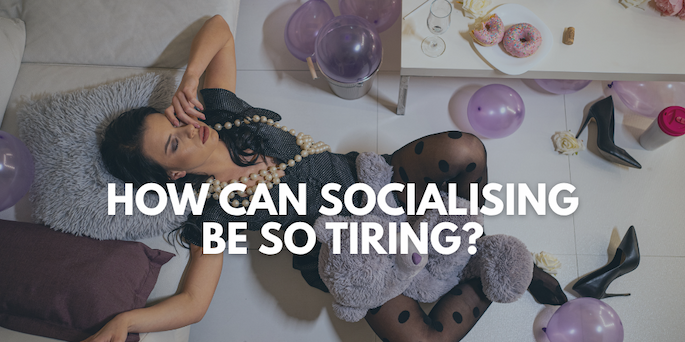
A social event isn't just one thing for your brain to manage.
While you're having a conversation, your brain may also be:
Listening to what someone is saying.
Trying not to interrupt.
Remembering what you wanted to say.
Following changes in conversation.
Reading facial expressions and social cues.
Filtering out music and background conversations.
Trying to remember someone's name.
Noticing what's happening around you.
Working out when it's your turn to speak.
Regulating your own excitement or emotions.
Remembering where you left your drink.
And perhaps wondering whether you've been talking for too long.
That's a lot happening simultaneously.
Then Add the Environment
Now put that brain into a Christmas party.
Music.
People talking.
Glasses clinking.
Food.
Movement.
Bright lights.
Multiple conversations.
People you know.
People you don't.
Someone calling your name from across the room.
Someone else touching your arm while you're trying to listen.
For an ADHD brain that may already be working hard to filter incoming information, social environments can require a significant amount of mental processing.
You might be having an absolutely brilliant time.
Your brain can still be working overtime.
“But I Enjoyed Myself!”
This is where people can become confused.
If the event was fun, why do you feel so depleted afterwards?
Because enjoyment and energy expenditure aren't the same thing.
You can love spending time with people and still need quiet afterwards.
You can enjoy a Christmas party and still want to spend the next morning alone.
You can adore your family and still find a full day of family celebrations overwhelming.
You can be social AND need significant recovery time.
One doesn't cancel out the other.
The Busy Season Effect
The other challenge at this time of year is that social events rarely happen in isolation.
Friday: Work Christmas drinks.
Saturday: Family barbecue.
Sunday: Kids' end-of-year event.
Tuesday: Dinner with friends.
Thursday: School function.
Saturday: Christmas party.
Suddenly your calendar is full of things you're genuinely looking forward to...
but there's no space between them.
And that space matters.
If every available moment becomes another commitment, your brain doesn't get an opportunity to reset before the next one begins.
Plan the Recovery, Not Just the Event
When you're putting something social into your calendar, try looking at what sits around it too.
If Saturday night is going to be big, could Sunday morning stay empty?
If you have a work function after a busy day, could you protect some quiet time beforehand?
If Christmas Day is always huge, could Boxing Day deliberately be slower?
Instead of waiting until you're completely depleted and cancelling everything, start treating recovery time as part of the plan.
Give Yourself Permission to Leave
You don't have to be the last person standing.
Sometimes we stay because:
“Everyone else is still here.”
“I don't want to be rude.”
“I should make the most of it.”
“I haven't spoken to everyone yet.”
But noticing when you've reached your limit is a valuable skill.
Leaving while you've still got something left in the tank can be very different from leaving once you're completely overwhelmed.
Find Your Reset
Recovery doesn't have to mean spending an entire day in bed.
It might be:
A quiet morning.
A walk without headphones.
Comfortable clothes and nowhere to be.
Time alone.
A familiar TV show.
Less conversation.
Turning your phone onto Do Not Disturb.
Sitting outside with a coffee.
Doing absolutely nothing for a while.
Your reset doesn't have to look like anyone else's.
It just needs to give your brain less to process.
Watch the Guilt
This one matters.
If you need recovery time after socialising, try not to spend that recovery time criticising yourself for needing it.
“Why am I so tired?”
“Everyone else seems fine.”
“I should be doing something.”
“Why can't I just keep up?”
Rest accompanied by guilt isn't particularly restful.
Your brain worked hard.

Before the calendar fills completely, look at the next few months.
Don't just identify the events.
Look at the spaces between them.
Where can you protect a quiet evening?
Which invitation doesn't actually need a yes?
Where could you leave earlier?
When will you have time to reset?
Because the goal isn't to avoid the social season.
It's to enjoy it without arriving at the end completely depleted.
And remember:
Needing to recover from something doesn't mean you didn't enjoy it.
Sometimes the things we love can still take a lot out of us.
Plan for the fun.
Plan for the people.
And maybe this year...
plan for the recovery too.
Warmly,