The ADHD Tax: Where Did the Money Go?
Have you ever looked at your bank account and wondered...
"Where did all my money go?"
Not because you went on a shopping spree.
Not because you made a series of bad financial decisions.
But because of all the little things that quietly add up over time.
The late fee because you forgot to pay the bill.
The streaming subscription you meant to cancel six months ago.
Replacing your headphones... again.
Buying groceries, only to discover you already had them at home.
Paying for express shipping because you left a birthday gift until the last minute.
Missing an appointment and being charged a cancellation fee.
Welcome to what many people call the ADHD Tax.
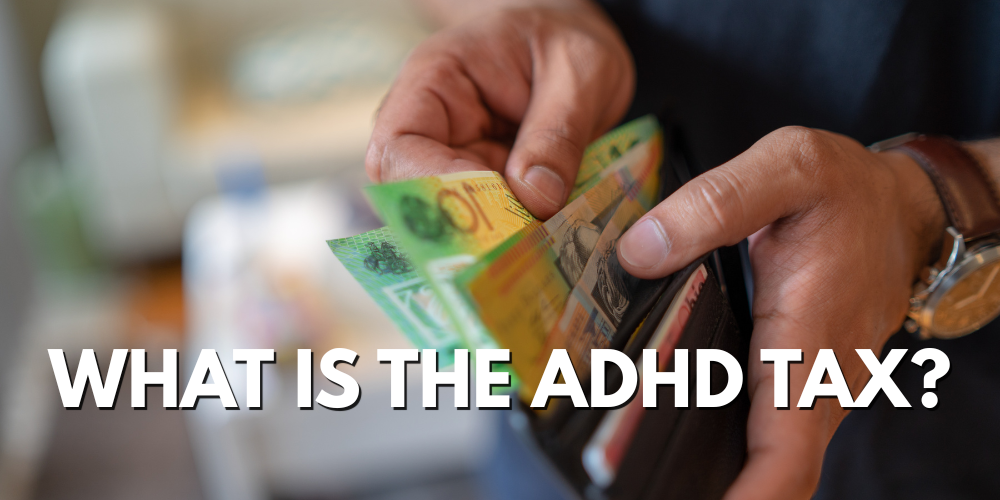
The ADHD Tax isn't a real tax.
It's the hidden financial cost of living with executive functioning challenges.
Executive functions are the brain's management system. They help us plan ahead, prioritise, organise, remember, estimate time and follow through with tasks.
When these skills are more challenging, everyday life can become unexpectedly expensive.
Not because you're careless.
Not because you're irresponsible.
But because your brain is working differently.
The Hidden Costs
For many adults with ADHD, the ADHD Tax can show up in ways like:
Late payment fees.
Forgotten subscriptions.
Replacing lost keys, wallets or phones.
Buying duplicate items because you couldn't remember what you already owned.
Impulse purchases that felt right in the moment.
Missed appointments and cancellation fees.
Food wasted because it was forgotten in the fridge.
Parking fines after losing track of time.
Individually, these costs might seem small.
Together, they can quietly add up to hundreds—or even thousands—of dollars each year.
It's Not About Intelligence
One of the biggest misconceptions about ADHD is that if someone knows what they should do, they'll simply do it.
But ADHD isn't a knowledge problem.
It's an execution problem.
You probably know the bill needs paying.
You intended to cancel the subscription.
You meant to return the library books.
You fully planned to leave the house earlier.
Knowing and doing are not always the same thing when executive functioning is involved.
Systems Beat Willpower
Many adults spend years blaming themselves.
"If I were just more organised..."
"If I tried harder..."
"If I stopped being so forgetful..."
The truth is, ADHD isn't overcome by trying harder.
It's supported by building systems that work with your brain, not against it.
Some ideas include:
Set bills to automatic payment where possible.
Use calendar reminders for renewals and appointments.
Create one designated place for everyday essentials like keys and your wallet.
Schedule a monthly "life admin" check-in to review subscriptions, bills and upcoming commitments.
Simplify decisions wherever you can—less mental load means more capacity for the things that matter.

If you've paid the ADHD Tax before, you're not alone.
It doesn't mean you're bad with money.
It doesn't mean you're lazy.
And it certainly doesn't mean you've failed.
It means your brain sometimes makes everyday tasks harder than they appear.
The goal isn't perfection.
It's understanding your brain well enough to build systems that reduce the cost—both financially and emotionally.
Because when we stop blaming ourselves, we can start supporting ourselves.
Warmly,